
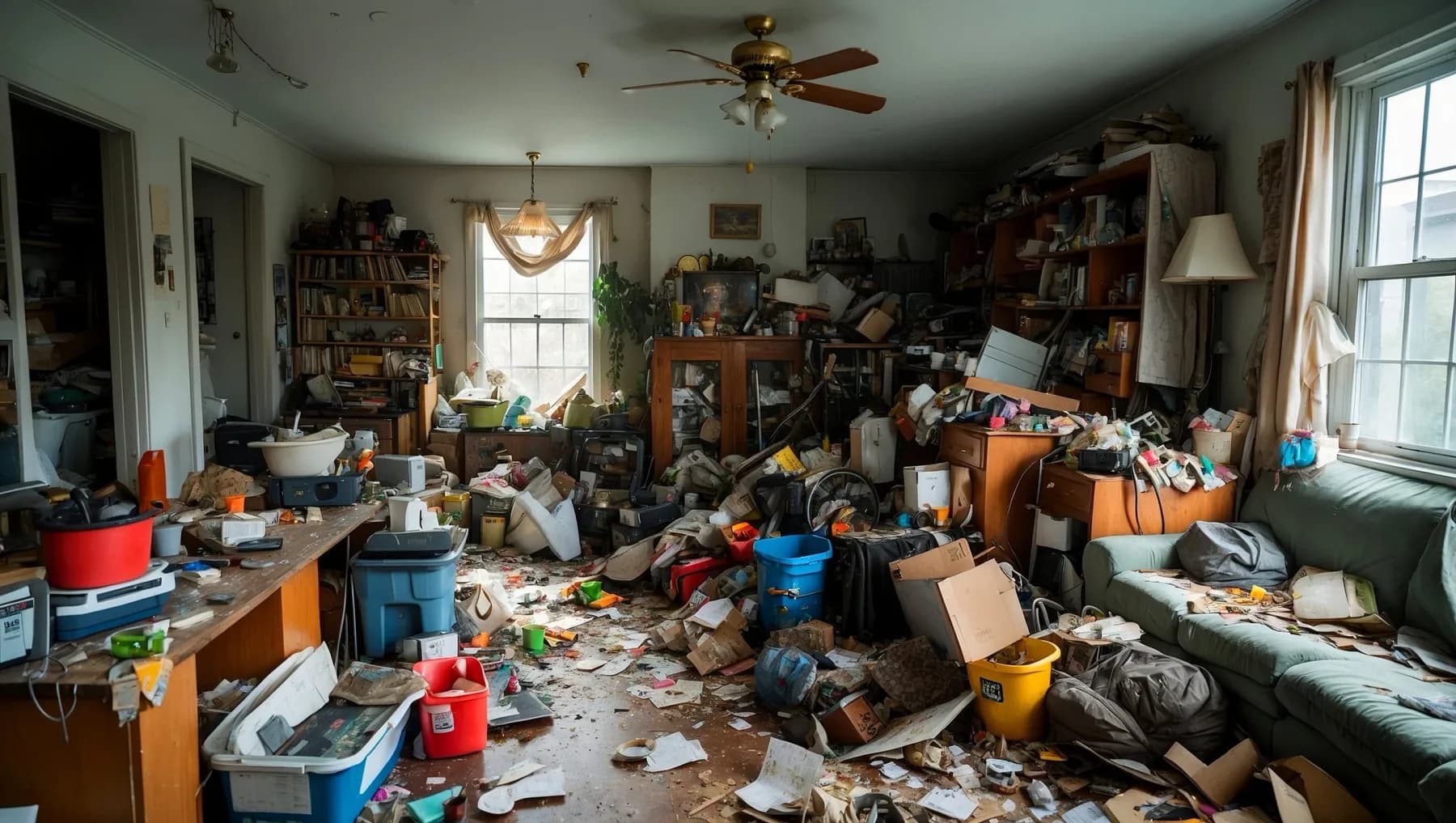
Financing Options for Hoarder Home Purchases
Buying a hoarder house can be overwhelming, but it can also create opportunity for the right buyer.
These properties often come with lower asking prices, less competition from traditional homebuyers, and room to add value through cleanup and repairs. But they also come with major financing challenges. Many hoarder homes are not in condition for a standard mortgage, especially when the clutter hides damage, safety issues, or deferred maintenance.
That is why buyers usually need to think about two things at the same time: how to buy the property and how to pay for the cleanup and renovation.
If you are here because the house is simply too much to deal with, Dello Investments can help you sell a hoarder house in Chicago as-is, with no cleanup required.
What makes hoarder homes harder to finance?
The biggest issue is property condition.
A house packed with belongings, damage, odors, pests, blocked access, or unsafe conditions may not qualify for many traditional home loans. Lenders want collateral that meets minimum property standards. If the house cannot be properly inspected or appraised in its current condition, financing gets harder.
That is why buyers of hoarder homes often run into problems like:
- failed or limited inspections
- lower appraised value
- lender concerns about safety or habitability
- higher cleanup and repair costs
- delayed closing timelines
For that reason, financing a hoarder house is often more about the exit plan and rehab plan than the purchase price alone.
Option 1: Cash purchase
Cash is often the simplest way to buy a hoarder house.
That is because cash buyers do not need the property to meet a lender’s condition standards before closing. They can buy the house in its current state, handle the cleanup after closing, and move faster than a financed buyer.
Cash purchases usually make the most sense for:
- investors
- experienced rehabbers
- buyers with liquid funds
- families buying directly from relatives
- buyers who want to avoid financing delays
The downside is obvious: you need the money up front, and you still need enough left over for cleanup, hauling, repairs, and carrying costs.
Option 2: Hard money loans
Hard money can be a fit when a buyer wants speed but does not have full cash available.
These loans are usually short-term and asset-based. In other words, the lender cares heavily about the property value and the buyer’s plan, not just traditional mortgage criteria. That can make them useful for distressed homes that conventional lenders will not touch.
Hard money loans can work well for:
- investors planning to renovate and resell
- buyers with a strong rehab strategy
- properties that need major cleanup before refinancing
The tradeoff is cost. Hard money usually comes with higher rates, fees, and shorter payoff windows. It is often a bridge, not a long-term solution.
Option 3: FHA 203(k) renovation loan
For buyers planning to live in the home, an FHA 203(k) loan can be one of the most useful options.
HUD says the Section 203(k) program insures mortgages that cover both the purchase or refinance of a home and the cost of rehabilitation, with rehab funds placed in escrow and released as the work is completed.
This can be helpful for hoarder houses because the buyer may be able to finance:
- the purchase price
- eligible repairs
- cleanup-related rehab work
- improvements needed to make the home livable
The challenge is that 203(k) loans require planning. Buyers usually need contractor bids, a detailed scope of work, lender approval, and a rehab process that follows the loan rules. These loans are generally better for owner-occupants than for quick investors. –> FHA 203(k) renovation loan details
Option 4: Fannie Mae HomeStyle Renovation
Another renovation-financing option is Fannie Mae’s HomeStyle Renovation mortgage.
Fannie Mae says HomeStyle allows a borrower to purchase or refinance a property and include funds in the loan amount for repairs, remodeling, renovations, or energy improvements.
This can be a strong fit when the buyer wants a conventional-style renovation loan instead of FHA financing.
Possible advantages include:
- one loan for purchase and renovation
- flexibility for many repair types
- use for purchase or refinance scenarios
As with 203(k), the key issue is planning. The lender will want a clear scope of work, contractor documentation, and a realistic project budget.
Can you get a traditional mortgage on a hoarder house?

Sometimes, but often not.
A conventional mortgage may still work if the house is cluttered but basically functional, safe, and financeable. But once the home crosses into major health, safety, or habitability issues, many standard lenders will hesitate.
That is why hoarder house buyers often end up choosing between:
- cash
- hard money
- renovation financing
- buying after the seller does some cleanup first
The more severe the condition, the fewer traditional loan options usually remain.
What buyers should budget for
The purchase price is only part of the cost.
Before buying a hoarder house, buyers should budget for:
- junk removal and haul-out
- cleaning and sanitation
- pest treatment
- mold or odor remediation
- repairs hidden by clutter
- code issues
- contractor estimates
- carrying costs during cleanup
- insurance and utilities
This is where many buyers get into trouble. They focus on the low purchase price and underestimate what it takes to make the house safe, financeable, or resellable. –> EPA guide on mold and moisture in homes
Inspections matter even more with hoarder houses
A normal inspection is important on any home. On a hoarder house, it is critical.
The problem is that inspectors may not be able to access every wall, floor, mechanical area, or structural component if clutter is blocking the house. That means the buyer may still inherit surprises after closing.
A strong buying plan usually includes:
- as much inspection access as possible
- contractor walkthroughs
- cleanup estimates
- a repair contingency buffer
- a realistic after-repair value estimate
The more uncertainty inside the house, the more conservative the buyer should be with financing and budget assumptions.
Is buying a hoarder house worth it?
Sometimes yes. Sometimes no.
A hoarder home may be worth buying when:
- the price leaves room for cleanup and repairs
- the buyer has a clear financing plan
- the location supports the after-repair value
- the buyer understands the risks
- the project fits the buyer’s experience level
It may not be worth it when:
- the damage is too severe
- financing is too expensive
- cleanup costs wipe out the margin
- the buyer is relying on best-case assumptions
The right answer depends less on the word “hoarder” and more on the actual numbers, condition, and exit strategy.
Final thoughts
Buying a hoarder house is rarely a simple transaction.
The financing side is harder, the cleanup side is heavier, and the hidden-cost risk is much higher than with a typical house. But for buyers who understand what they are walking into, there are workable options.
Cash is the simplest. Hard money can work for speed. FHA 203(k) and HomeStyle Renovation can help buyers combine the purchase and rehab into one loan when the deal fits the program rules.
If you are dealing with a hoarder house in Chicago and the situation feels too big to fix, selling as-is may be the easier path — no cleanout, no repairs, and nothing to sort through first.
Questions, Answered
What homeowners ask us most.
It depends on the severity. If the clutter creates safety hazards, structural damage, or prevents a full appraisal, most traditional lenders will deny the loan. In these cases, buyers typically use cash, hard money, or specialized renovation loans like the FHA 203(k).
Appraisers require access to every room and the home’s mechanical systems (HVAC, electrical, plumbing). If “excessive debris” prevents them from inspecting the property or if there are health and safety violations, the appraisal will likely be marked “subject to” cleanup or repairs, stalled until the issues are resolved.
For investors, a cash offer is the best route as it bypasses lender inspections. For owner-occupants, a renovation loan (HomeStyle or 203k) is best because it rolls the cost of the professional junk removal and cleaning into the mortgage.
Yes. Hoarder houses typically sell at a significant discount—often 20% to 50% below market value—to account for the cost of hauling, deep cleaning, hidden repairs, and the “risk premium” buyers take on when they can’t see the home’s bones.
The fastest way is to sell to a professional “as-is” buyer. Companies like Dello Investments purchase hoarder properties for cash, meaning the seller can leave the unwanted items behind and close without doing any cleanup or repairs.
Get your fair cash offer today.
It takes five minutes to start and costs nothing to hear the number, and when you call, text, or send the form, Karen's team answers seven days a week.